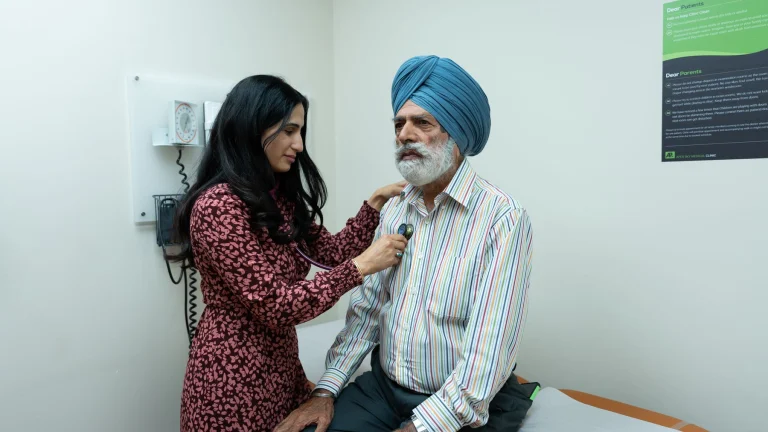


Osteoarthritis of the knee is a common cause of pain and stiffness, especially after the age of fifty. Most people start with non-surgical treatment, and many manage well for years. For some, however, the joint becomes so worn that daily life is seriously affected.
Non-surgical treatment comes first
- Weight management to reduce load on the knee
- Physiotherapy and strengthening exercises
- Pain relief medicines as advised by your doctor
- Supports, walking aids and activity changes
Signs it may be time to discuss surgery
- Knee pain that disturbs your sleep
- Difficulty walking short distances or climbing stairs
- Pain that continues despite months of proper treatment
- A visible bend or deformity in the leg
- X-rays showing severe joint damage
What does knee replacement involve?
In total knee replacement, the damaged joint surfaces are replaced with metal and plastic parts. Physiotherapy starts soon after surgery, and most patients walk with support within a day or two. Full recovery takes several weeks to a few months.
An orthopaedic surgeon will examine your knee, review your X-rays and discuss whether surgery is the right choice for you, and when.
This article is for general awareness only. Every patient is different, so please consult a qualified surgeon before deciding on any treatment.

Part of the Surgery Wallah team of surgical specialists in Noida.