
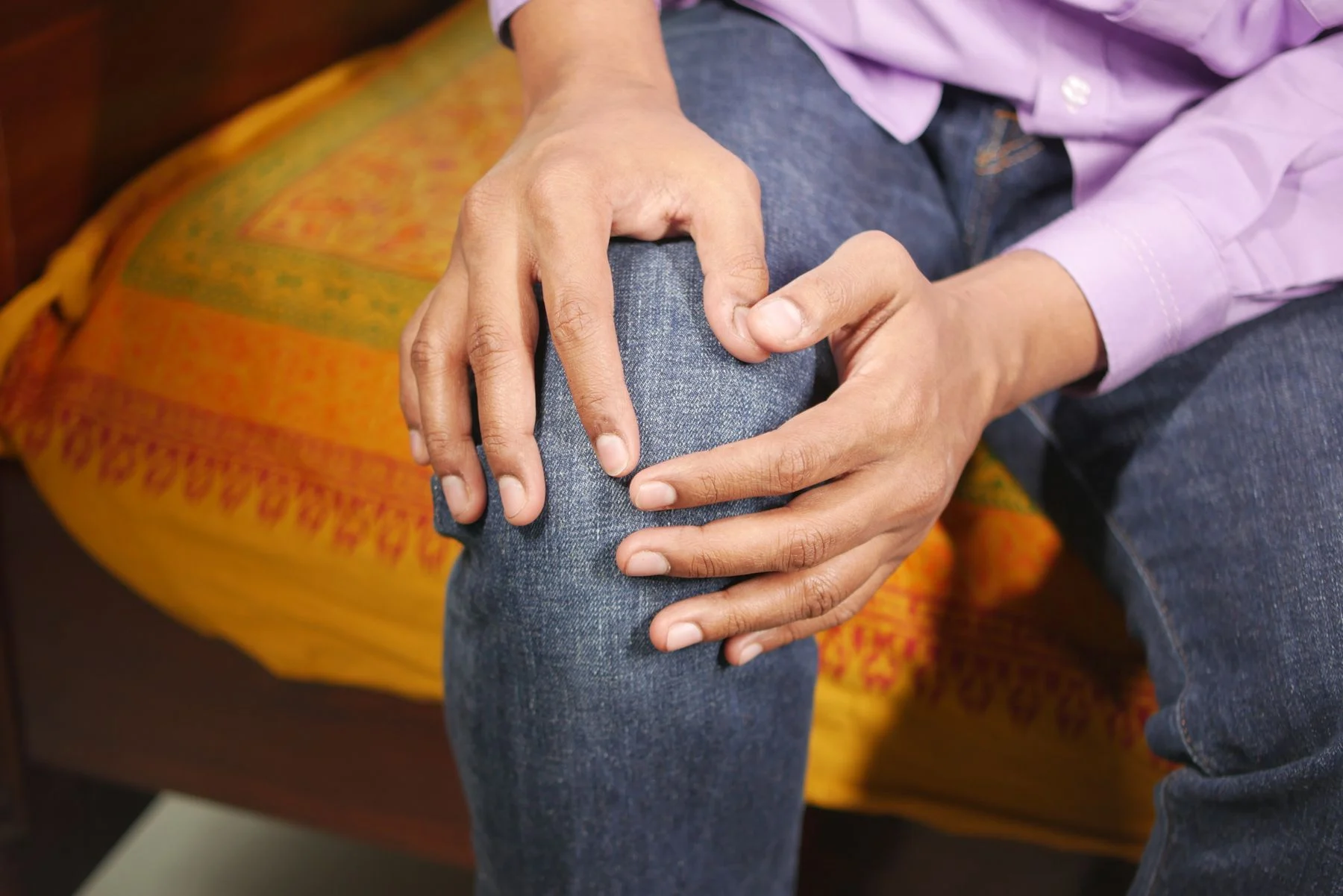
Knee arthritis
Pain, stiffness and deformity of the knee.

Need help choosing a specialist? Call or WhatsApp us.
Relief from joint pain and injuries, from non-surgical treatment to knee and hip replacement, with an AIIMS-trained orthopaedic surgeon.
Joint pain, arthritis and injuries can make everyday activities like walking, climbing stairs or sleeping difficult. Many patients improve with medicines, physiotherapy and lifestyle changes, and surgery is advised only when these no longer help.
Our orthopaedic surgeon, trained at AIIMS, New Delhi, treats arthritis, knee and hip problems, fractures and sports injuries. When the joint is badly worn, knee or hip replacement can relieve pain and restore mobility, followed by guided rehabilitation.
Not sure what you have? Our specialists will examine you and explain your diagnosis clearly.
Pain, stiffness and deformity of the knee.
Pain in the groin or thigh and difficulty walking.
Broken bones from falls and accidents.
Ligament tears, sprains and meniscus injuries.
Evaluation of spine-related pain.
Frozen shoulder and rotator cuff injuries.
Book a consultation if you notice any of these:
Severe pain, heavy bleeding or high fever? Go to the nearest emergency or call 112.
Examination, X-rays and sometimes an MRI. Non-surgical options like physiotherapy are tried first when suitable.
Joint replacement surgery takes about 1–2 hours. Physiotherapy usually starts within a day.
Walking with support in a few days, steady improvement over 6–12 weeks with regular physiotherapy and follow-up.
We recommend the least invasive option that suits your condition, and explain the benefits and risks of each before you decide.
Replacing the worn knee joint surfaces.
Replacing the damaged hip joint.
Plates, screws and nails to fix broken bones.
Medicines, injections and physiotherapy plans.
Treatment and rehabilitation of ligament injuries.
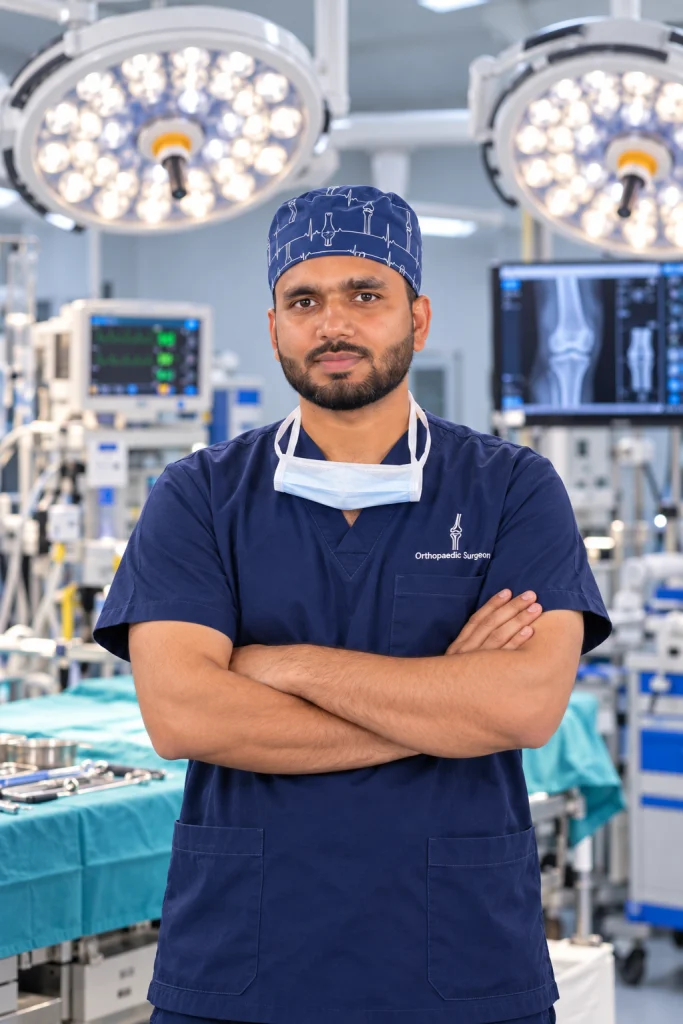
Orthopaedic & Joint Replacement Surgeon
MBBS · MS (AIIMS · New Delhi)
AIIMS-trained orthopaedic surgeon focused on joint replacement, knee and hip disorders, arthritis, sports injuries and fractures.
Meet the specialist, share your symptoms and reports, and get a thorough examination.
The right tests, a clear diagnosis and every option explained, including non-surgical ones.
Safe surgery or procedure with modern techniques, when it is truly needed.
Clear recovery guidance and regular follow-up until you are back to normal life.
Have another question? Call or WhatsApp us and our team will help.
Ask on WhatsAppWhen pain disturbs sleep and daily life despite proper non-surgical treatment and X-rays show severe damage.
Most patients start walking with support within a day or two, with physiotherapy guidance.
Modern implants often last many years. Your surgeon will explain what to expect in your case.
No. Many fractures heal with a plaster or brace. Surgery is needed when the bone is displaced or unstable.
Age alone is not the deciding factor. Your general health and how much the joint limits your life matter more.
In some patients, yes. Your surgeon will advise whether one or both knees at a time is safer for you.