
Cataract
Blurry, cloudy or dim vision and glare.

Need help choosing a specialist? Call or WhatsApp us.
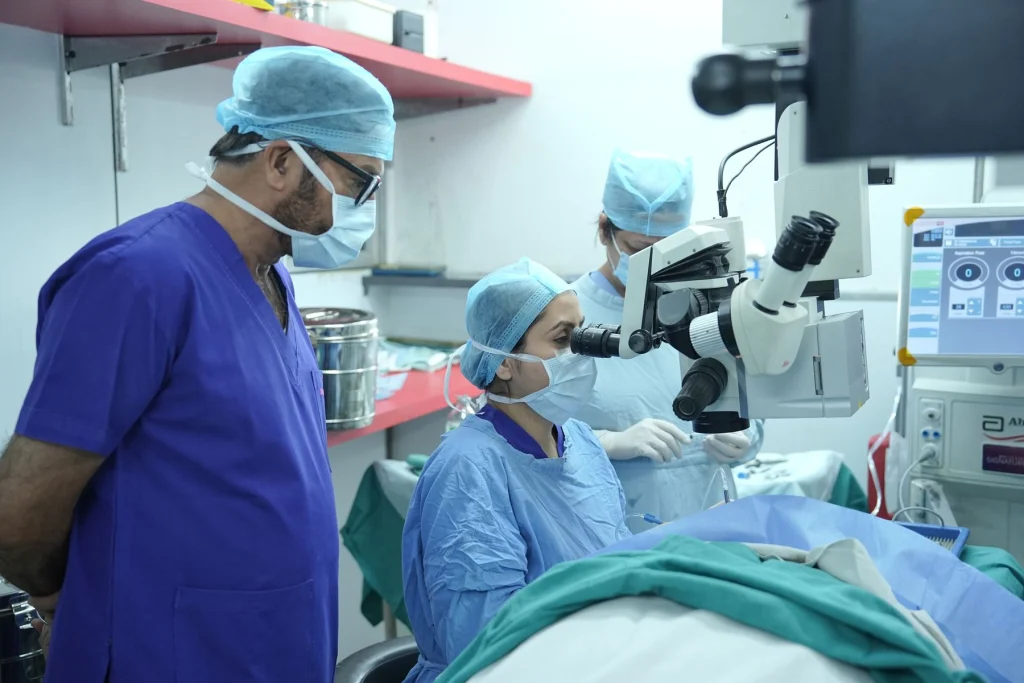
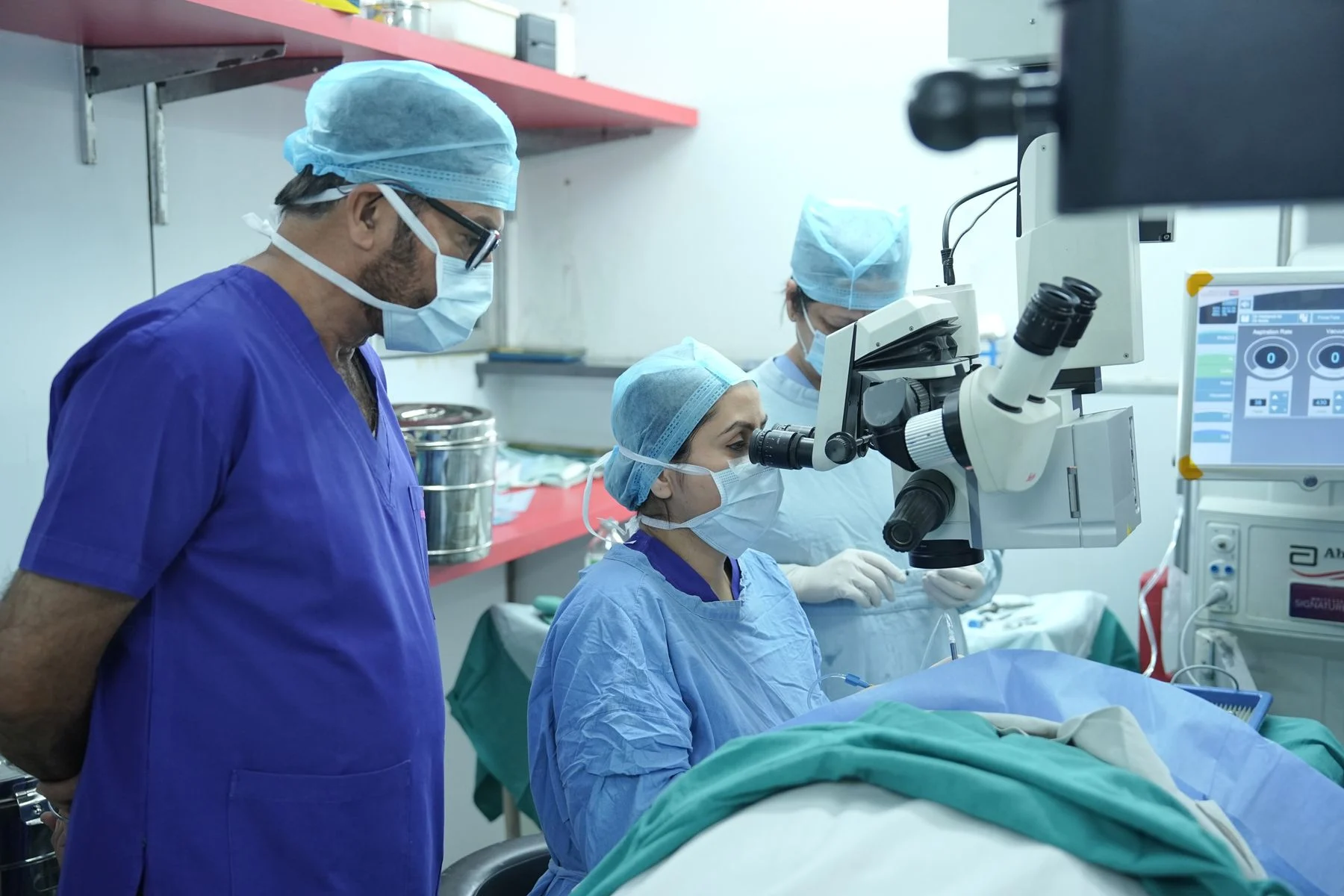
Painless, stitch-free and bandage-less cataract surgery and complete eye care from a surgeon with more than 3,000 cataract surgeries.
A cataract is a clouding of the eye’s natural lens that makes vision blurry, dull or glare-prone. It is very common with age and is treated with a short, safe operation in which the cloudy lens is replaced with a clear artificial lens.
Our ophthalmologist, Dr. Nishtha Yadav, has performed more than 3,000 cataract surgeries. She offers painless, sutureless and bandage-less surgery, along with eye check-ups and screening for conditions like glaucoma and diabetic eye disease.
Not sure what you have? Our specialists will examine you and explain your diagnosis clearly.
Blurry, cloudy or dim vision and glare.
Need for glasses and changing power.
A silent condition that can damage the optic nerve.
Changes in the retina due to diabetes.
Irritation, redness and watering.
Conjunctivitis and other infections.
Book a consultation if you notice any of these:
Severe pain, heavy bleeding or high fever? Go to the nearest emergency or call 112.
A complete eye check-up and lens power measurement. Your surgeon helps you choose the right lens.
Cataract surgery usually takes 15–20 minutes with numbing drops. You go home the same day.
Eye drops for a few weeks, protective glasses, and follow-up visits. Most patients notice clearer vision within days.
We recommend the least invasive option that suits your condition, and explain the benefits and risks of each before you decide.
Stitch-free cataract removal with lens implant.
Choice of intraocular lenses for your needs.
Vision, pressure and retina examination.
Early detection to protect vision.
Regular checks for people with diabetes.
 7+ years experience
Consultant Ophthalmologist & Cataract Surgeon
MBBS · MS (Ophthalmology)
Eye surgeon with 7+ years of experience and more than 3,000 cataract surgeries, offering painless, stitch-free cataract surgery.
Meet the specialist, share your symptoms and reports, and get a thorough examination.
The right tests, a clear diagnosis and every option explained, including non-surgical ones.
Safe surgery or procedure with modern techniques, when it is truly needed.
Clear recovery guidance and regular follow-up until you are back to normal life.
Have another question? Call or WhatsApp us and our team will help.
Ask on WhatsAppNo. It is done under local anaesthetic drops or a small injection, and most patients feel little or no pain.
When it starts affecting daily activities like reading, driving or recognising faces.
Many patients notice clearer vision within a day or two, with full recovery over a few weeks.
It depends on the lens chosen. Your surgeon will discuss options before surgery.
Usually one eye is operated first, and the second eye a little later once the first has healed.
Usually from the next day. Your surgeon will tell you which activities to avoid for a few weeks.