

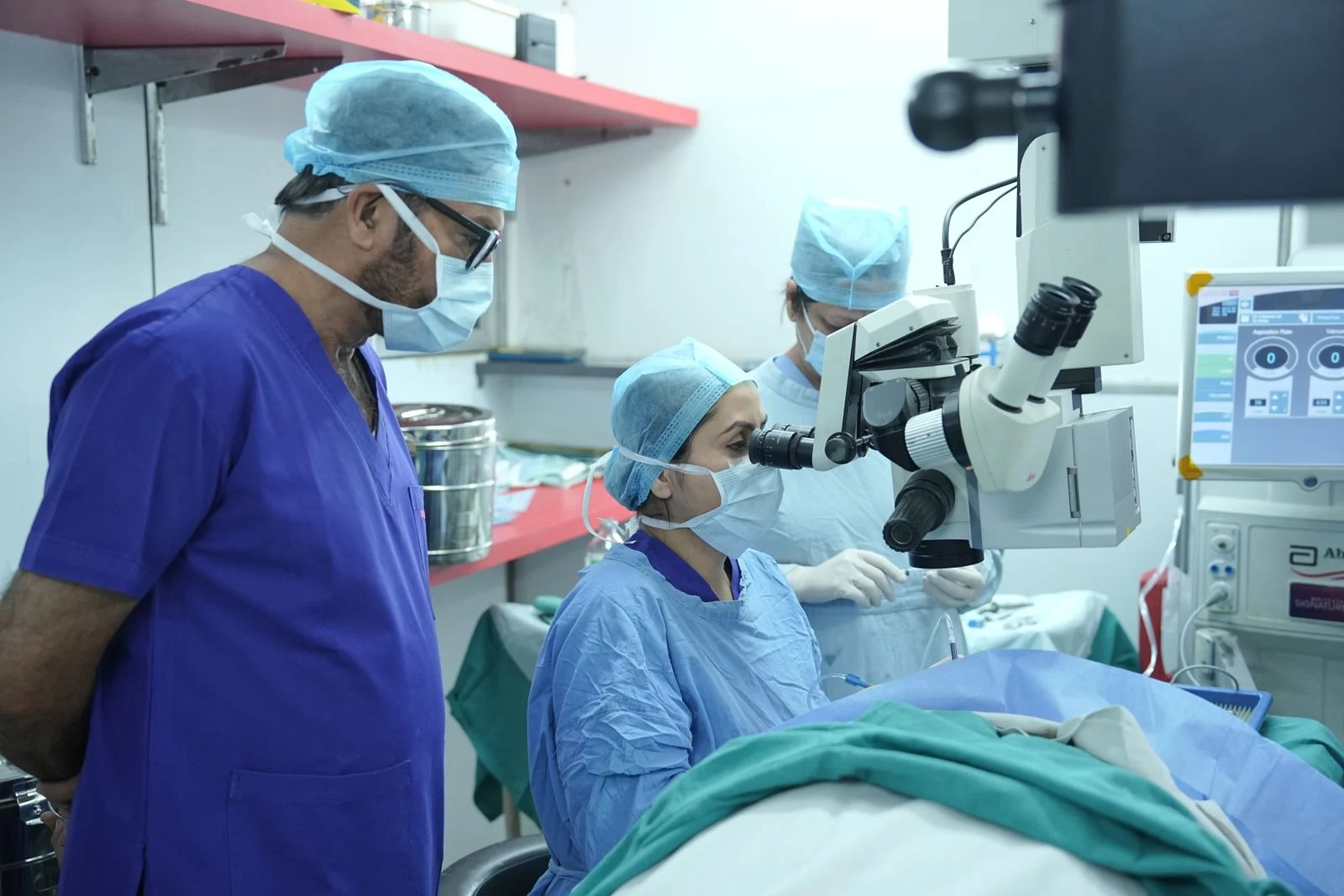
A cataract is a clouding of the natural lens inside the eye. It develops slowly with age and makes vision blurry, dull or full of glare. The good news is that cataract surgery is one of the safest and most common operations today.
Signs of cataract
- Blurry or cloudy vision
- Glare and halos around lights, especially at night
- Colours looking faded or yellowish
- Frequent changes in glasses power
- Difficulty reading or recognising faces
When should cataract be operated?
There is no need to wait for a cataract to become “ripe”. Surgery is usually advised when the cataract starts affecting daily activities like reading, driving, cooking or walking safely.
How is the surgery done?
In modern phaco surgery, the cloudy lens is removed through a very small opening and replaced with a clear artificial lens. It usually takes 15–20 minutes with numbing drops, needs no stitches and most patients go home the same day.
Recovery tips
- Use the eye drops exactly as prescribed
- Avoid rubbing the eye and protect it from dust and water for a few weeks
- Wear the protective glasses given to you
- Do not miss your follow-up visits
This article is for general awareness only. Every patient is different, so please consult a qualified doctor before deciding on any treatment.

Part of the Surgery Wallah team of surgical specialists in Noida.